
What losing my mother-in-law taught me about family, identity and the parts of ourselves we get to keep
Last Sunday, my mother-in-law died.
Although technically, I suppose, she hasn’t been my mother-in-law for a very long time.
Except she has.
And I think that’s what I’ve been thinking about ever since.
I met her in 1990 when I met the man who would become my husband.
Within a few months, I was pregnant.
Probably not quite how she’d imagined things unfolding!
But she was supportive.
She’d already been a solo mum for six years by then, although very much not through choice.
Her husband, Colin, had been killed in a horrific road accident in 1984.
She’d been in the car with him.
It was a loss that changed that entire family and, in many ways, continued to ripple through it for decades afterwards.
She never met anyone else.
Never wanted to.
He was the love of her life.
My eldest son has Colin as his middle name, even though he never got to meet the grandfather whose name he carries.
Not long after I became pregnant, my then-partner and I realised our salaries weren’t going to stretch particularly far with a baby on the way, so we moved in with his mum.
His sister, who’s the same age as me, was still living there.
So was his younger brother.
And there we all were.
Me, with a young baby, living with a family I’d known for approximately five minutes.
What could possibly go wrong?!
We survived about eight or nine months under the same roof before moving into our own place.
Life carried on.
Another baby came along.
We got married.
And then, in 2000, something rather lovely happened.
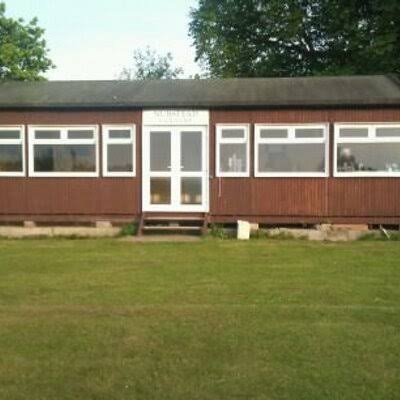
A house became available in a tiny road beside the cricket club where my mother-in-law had met her husband all those years before.
There were only six houses in the road.
She’d actually been born there.
Other members of her family had lived there.
The cricket club was woven through the family’s history.
The whole bloody family were cricket mad.
The house meant something.
We’d already been talking about buying somewhere together and when this particular house came up, it felt like it was meant to be.
So we bought it.
Initially, we all shared everything.
Kitchen. Bathroom. The lot.
Then we built an extension and gradually the house became two homes joined together.
There was “our side” and there was “Nana’s side”.
Because by then, that’s mostly what she was called.
Nana.
And for almost thirteen years, that’s how we lived.
Looking back, I don’t think I fully appreciated what that gave my boys.
My own parents had both died when they were very young and their other grandfather had died years before they were born.
So for most of their childhood, Nana was their only grandparent.
And she was just… there.
Part of everyday life.
Part of the fabric of their childhood.
She helped make it possible for us to have the ridiculously busy family life we had, travelling all over the country for football and everything else that seemed to fill those years.
She loved our dog Jex.
And she made legendary cricket teas.
Honestly, since she died, you tell people she’s gone and one of the first things they say is:
“Oh my God. Her cricket teas.”
The cakes.
The scones.
Apparently nobody thought to secure the recipes while we had the chance and even if we had, I suspect we’d never recreate whatever magic she put into them.
Life in that house wasn’t perfect.
Of course it wasn’t.
We were different people. There were challenges. There were moments when living that closely together was probably a bit fucking much for all of us.
But overwhelmingly, it worked.
Until my marriage didn’t.
When a life changes, what happens to the people who belonged to the old one?
I’ve written before about eventually realising that the house we’d created had become a museum of my marriage.
Every room contained a version of the life I’d thought I was going to have.
And eventually I knew I had to leave.
For the first six months after my marriage broke down, though, we all remained under that same roof.
Me.
My mother-in-law.
My youngest son.
I can only imagine how difficult that must have been for her.
She knew what her son had done.
She cared about me. AND he was still her son.
She somehow had to exist in the middle of all of that and find a way of supporting both of us.
And she did.
Eventually I moved out.
Eighteen months later, the house was lost.
Which meant she lost her home too.
She moved into rented accommodation with my youngest son and Jexi, our dog, who she continued to look after until he died in January 2021.
But something slightly unexpected happened after my marriage ended.
She stayed Nana.
Not only to my boys.
To me too.
We lived in the same village.
I’d pop in.
I’d see the dog.
I’d see my sons there.
Then grandchildren started arriving.
I remained close to my sister-in-law.
Life changed shape, but the relationship never disappeared.
A few months ago, when Nana was in hospital, my eldest son and I went to see her.
We sat there for two or three hours chatting about all sorts of things.
It was lovely.
There was no weirdness about the fact that I’d divorced her son years before.
There was just history.
Affection.
Family, I suppose.
Twenty days before she died, it was my birthday.
She texted me.
Happy birthday.
Such a tiny, ordinary thing.
And somehow, now, it feels enormous.
Nobody checked the family tree at the door
Nana had been unwell for some time.
Parkinson’s. A rare blood cancer. Heart problems.
She was 82 and had been in and out of hospital.
Last Friday, she became unresponsive.
My sister-in-law kept me updated over the weekend.
My youngest son told me how difficult it was. Every now and again Nana’s eyes would open, but she wasn’t really there.
By Sunday morning, there was no change.
My sister-in-law and I had been messaging and we talked about me going to the hospital.
So I went.
And Nana died just as I arrived.
I wish I’d been a few minutes earlier.
And yet I’m also incredibly grateful that I arrived when I did.
Because both my sons were there.
My nieces and nephews were there.
My sister-in-law and brother-in-law were there.
And I could hug my boys.
I could be with them while they lost the only grandparent they’d really known.
I could hug my nieces and nephews and sit with this family I’ve known for 36 years while we absorbed the fact that its matriarch had gone.
And there wasn’t a moment when I thought:
Do I still belong here?
Nobody checked the family tree at the door.
Nobody needed to define my relationship to the woman who had just died.
There wasn’t a bloody form asking whether I was current family, former family or family-adjacent.
I was simply there.
Because of course I was.
We don’t have to throw everything away when we reinvent ourselves
That’s what I’ve been thinking about ever since.
We talk so much about letting go of old identities.
I certainly do.
My work is built around the idea that we aren’t sentenced to remain the person life, experience and other people have taught us to be.
We can change.
We can consciously choose who we are.
We can leave lives that no longer fit us and create completely different ones.
I believe that to my bones.
But perhaps there’s another side to that conversation that we don’t talk about enough.
Not everything from an old identity needs to be discarded.
My marriage ended.
My identity as somebody’s wife ended with it.
I left the house.
I rebuilt my life.
Eventually, I became a grandmother myself.
So much of who I was in those years doesn’t exist anymore.
But I didn’t stop loving people simply because the legal relationship connecting us changed.
My sister-in-law didn’t suddenly become some woman I used to know.
Her children didn’t stop being my nieces and nephews.
And the woman I’d lived alongside for thirteen years, who’d helped raise my children, looked after my dog, supported me through the implosion of my marriage and texted me happy birthday twenty days before she died didn’t suddenly become “my ex-husband’s mother”.
She was Nana.
Maybe identity isn’t always as clean as we’d like to make it.
Maybe reinvention isn’t supposed to be.
We don’t have to burn down every previous version of ourselves in order to build a new one.
We get to keep things.
People.
Relationships.
Traditions.
Memories.
Pieces of identities that technically don’t fit the current version of our lives but still belong to us anyway.
Because we are not a succession of completely separate women.
We are an accumulation.
Every version leaves something behind.
And perhaps part of consciously choosing who we are isn’t only deciding what needs to go.
It’s also recognising what deserves to stay.
On Sunday, I wasn’t someone’s ex-wife standing in a hospital room with her former in-laws.
I was Sarah.
Mum to two devastated sons.
Auntie.
Sister-in-law.
And, in whatever way mattered after 36 years of knowing and loving her, still a daughter-in-law too.
Some relationships outlive their labels.
Some love does too.
And some parts of who we’ve been become so woven into who we are that they don’t need a name anymore.
They just belong.
Sleep peacefully, Nana.
And wherever you are, I sincerely hope someone’s put you in charge of the cricket teas.


Such an incredibly well written and heartfelt story of a relationship that meant so much and who you are during all stages
Oh my goodness thank you so much Nadine, that means such a lot, thank you.